Designing SpaceAge™ has forced me to think much more deeply about what actually matters in composition and production. I have written articles over the years offering advice on how to compose music, arrange parts, shape sounds, and make creative decisions, but designing both the software and the workflow around it has opened my eyes in a different way. When you have to decide what a tool should encourage, what it should automate, what it should leave alone, and what kinds of variation are actually musically useful, you start examining assumptions that are easy to overlook when you are simply making music. One of the ideas that has emerged from that process is something I coined for myself: Flux Nodes™.
The idea is pretty simple. In my Hat Lab, which is a straightforward synth built around the usual sort of physical-modeling approach for quick, bright, metallic sounds, I can assign a Flux Node to a parameter and define a range within which controlled randomization is allowed to happen.
Say the useful brightness range for a particular hi-hat patch sits somewhere between 90 and 110 on a 0–127 scale. Rather than playing exactly the same timbre every time, I can allow the value to move around inside that range according to probability.
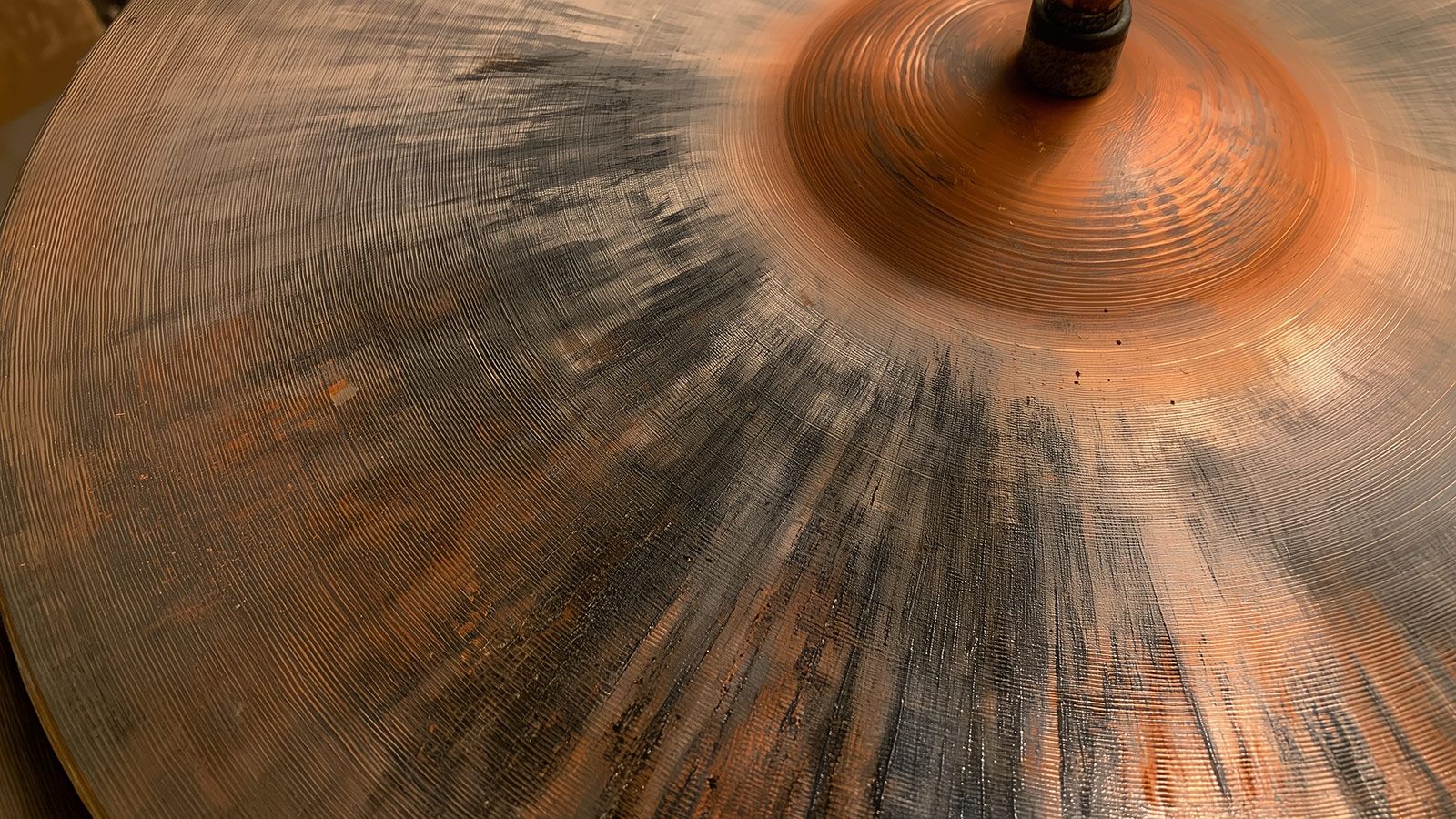
The result is not really “random sound” in the usual sense. It is closer to what happens when a drummer keeps hitting the same hi-hat but does not strike the exact same microscopic location with the exact same force every time. Different parts of the metal behave a little differently. The angle changes. The stick lands somewhere slightly different. The physical object remains recognizably the same instrument, but its timbre is constantly moving within a believable range.
That is the part I find interesting.
A Flux Node can be assigned to many different parameters, and the permissible distance between the extremes can be very small or fairly broad. Ultimately, the range is still a compositional decision. I decide how far the sound is allowed to wander, or I stumble onto something interesting and decide that the result is worth keeping.
What I am generally less interested in is creating a hi-hat sequence by randomly pulling in radically different hi-hat samples.
That can certainly produce novelty, but novelty and musical variation are not necessarily the same thing.
To my ears, radically changing the underlying sound can begin to hijack the composition. Instead of hearing a coherent instrument behaving differently from hit to hit, I start hearing a succession of new timbres announcing themselves. At some point I would rather deliberately sequence a filter, change the synthesis parameters myself, or introduce another sound because I actually want that sound to appear there.
That is admittedly a bias.
For a conventional hi-hat part, I would generally rather program variation within the reasonable behavioral range of a hi-hat. With multisamples, that might mean different velocity layers, striking positions, articulations, or naturally related recordings. With synthesis, it means letting certain physical or perceptual characteristics move around in ways that resemble the small differences produced by actual playing.
The distinction I keep coming back to is constrained variation versus stochastic novelty.
Flux Nodes are meant to live on the constrained side of that line.
The same idea obviously extends well beyond hi-hats. A parameter might have a narrow region where nearly every value sounds useful. Another might tolerate huge excursions. Some parameters could change almost constantly, while others might move only occasionally. Probability itself can become part of the musical behavior.
The important thing, at least for me, is that the system is not being asked to compose by surprise.
It is being given a musical territory and told that it may move around inside it.
That probably reflects how I think about experimental music in general. Anyone who has heard my dark ambient work knows that I am hardly opposed to strange sounds. I love them. I just find them more compelling when they enter because I chose the context in which they appear.
There is a difference between discovering an unusual timbre and allowing a sequence of unusual timbres to become the organizing principle of the music.
Sometimes that can work beautifully. It is simply not where my instincts usually lead me.
I tend to want the machine to introduce life, instability, and variation without taking authorship away from the person who decided what the music was supposed to be doing in the first place.
That, more or less, is what I mean by a Flux Node™.